


Know exactly what you are buying
300 pearl and jewellery terms, each one linked to a piece you can hold.
Where would you like to begin?
Types of Pearl
Freshwater, saltwater, South Sea, keshi, and how to tell a real pearl from a coated bead.
Shapes
Round, baroque, drop, coin and the rest, and what each one is worth paying for.
Quality & Grading
What AAA actually means, plus lustre, nacre, orient and the claims to be sceptical of.
Size & Length
Millimetres, choker to rope, bangle sizing, and which length suits which neckline.
Jewellery Styles
Jhumka, mangalsutra, kundan, polki, temple work and the rest of the Indian vocabulary.
Gold & Hallmarking
Karat versus carat, 22K and 18K, 916, plating, vermeil and what a BIS hallmark proves.
Gemstones & Cuts
Ruby, emerald, sapphire and zircon, their Indian names, and the cuts from princess to cabochon.
Metals & Plating
925 silver, platinum, brass and the alloys and finishes a piece is actually built from.
Clasps & Construction
Clasps, knotting, drilling and settings, the parts that decide whether a piece survives.
Care & Authenticity
Storing pearls, the tooth test, restringing, and the astrological terms buyers ask about.
Buying & Value
Making charges, wastage, gold rate, GST, buyback and what a piece is actually worth.
Clasps & Construction
1–24 of 39
Bail
The loop connecting a pendant to its chain. Its inner width caps what chain the pendant will fit.
Bead Cap
A small cupped metal piece that sits over the end of a bead or pearl, hiding the drill hole and adding detail.
Bezel Setting
A metal rim wrapped around the edge of a stone or pearl to hold it. The most protective setting there is.
Bombay Screw
An earring fitting where the post itself is threaded, and a small screw back winds directly onto it.
Box Clasp
A folded metal tongue that clicks into a box. The traditional fine-jewellery clasp, usually with a safety catch.
Chain
Linked metal forming a flexible necklace or bracelet, sold by length, gauge and link pattern.
Channel Setting
Stones held in a groove between two walls of metal, with no prongs between them.
Clasp
The fastening that closes a necklace or bracelet. The most common point of failure and the most overlooked part of a purchase.
Crimp Bead
A soft metal tube squeezed flat to lock beading wire against a clasp. Used instead of knotting on wire-strung pieces.
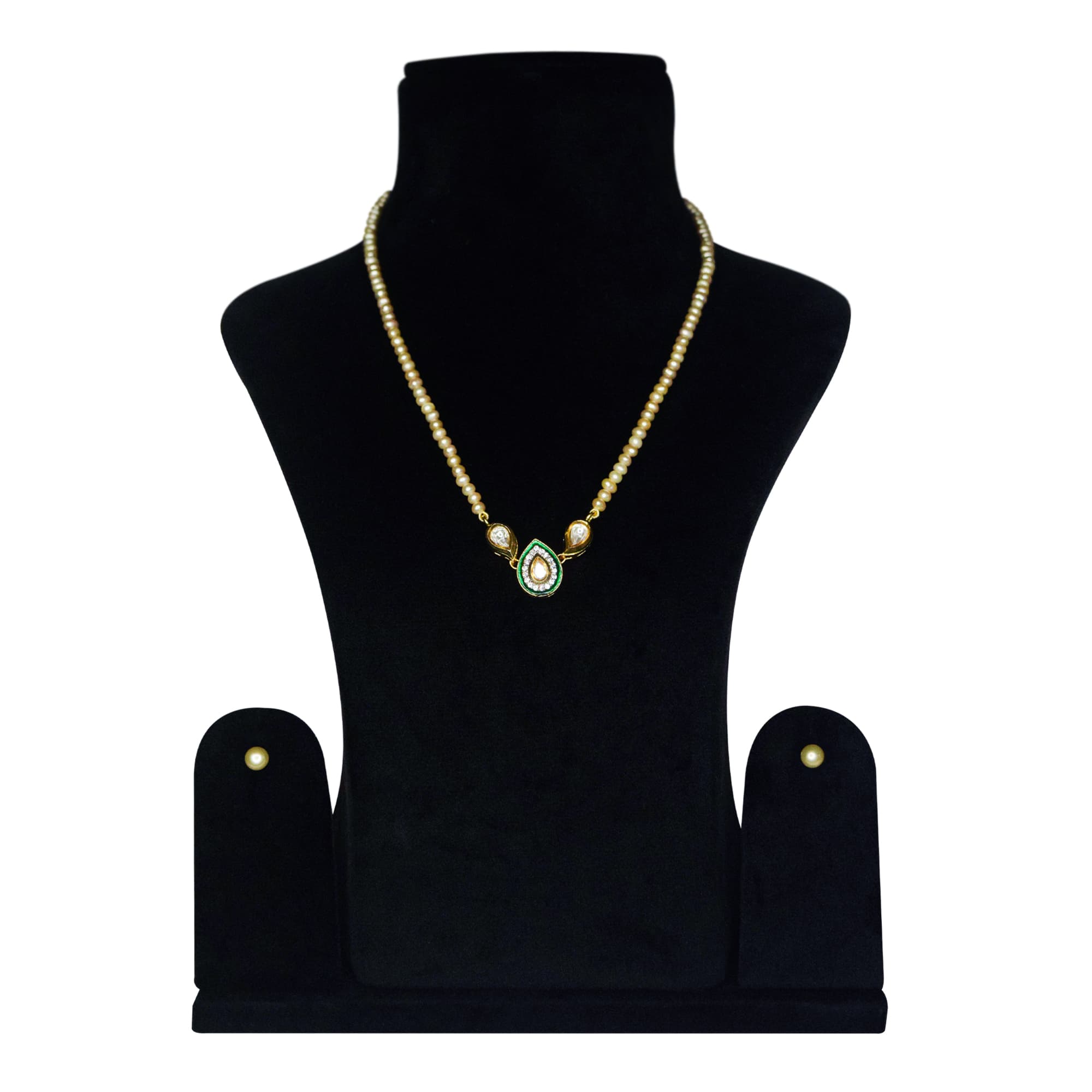
Dholak Bead
A drum-shaped bead, wider at the middle and tapering to both drilled ends. Named after the dholak drum.
Dori
A silk or cotton cord closing the back of a necklace, tied rather than clasped, so the length adjusts to the wearer.
Ear Wire
The hook that passes through the piercing on a hanging earring.
Filigree
Lacework made from fine twisted wire, soldered into openwork patterns. Light for its size.
Findings
The trade word for all the small functional parts of a piece: clasps, jump rings, posts, backs, caps and pins.
French Wire
A fine coil of wire threaded over the silk at each end of a strand, protecting the thread where it turns at the clasp.
Full-Drilled
A pearl drilled all the way through so thread can pass. How every strand pearl is prepared.
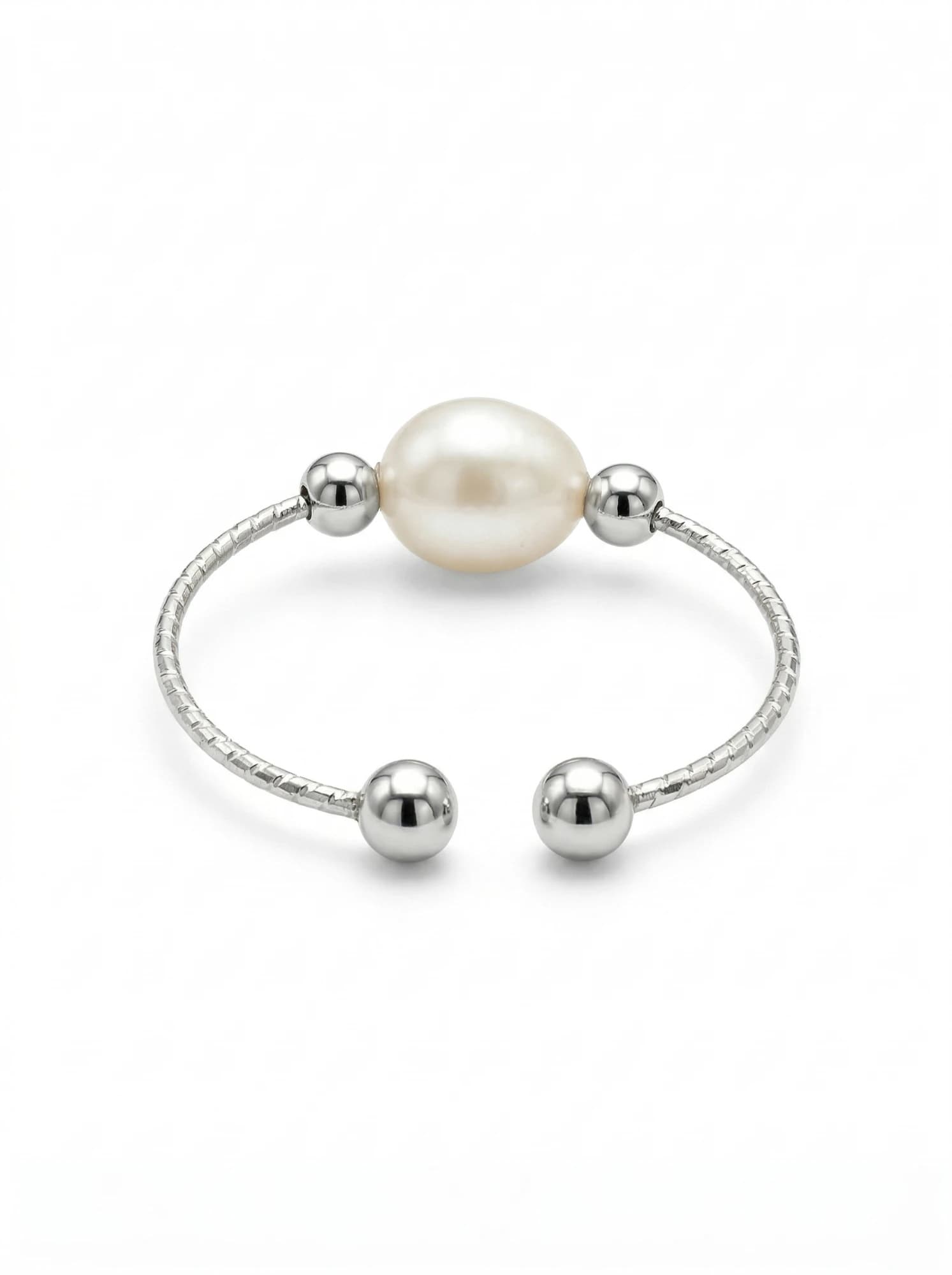
Ghungroo
A small metal bell strung onto anklets and jewellery, so the piece is heard as well as seen.
Granulation
Tiny metal spheres fused to a surface to build texture and pattern, with no visible solder.
Half-Drilled
A pearl drilled only partway through, so it can be cemented onto a post. How pearls are mounted in studs and rings.
Halo Setting
A ring of small stones encircling a larger centre, making it look bigger and brighter.
Jump Ring
A small metal ring joining two parts of a piece. The commonest failure point after the clasp.
Knotting
A knot tied between each pearl on the thread. It stops pearls rubbing and limits a break to a single lost pearl.
Lobster Clasp
A spring-loaded hook shaped like a lobster claw. The most secure everyday clasp and the modern default.
Lost Wax Casting
Carving a design in wax, encasing it in plaster, melting the wax out and filling the cavity with metal.